Bin Ayyaf Award: Between Humanity, Architecture, and Identity
Amidst the unprecedented urban transformation unfolding in the Kingdom of Saudi Arabia, the Prince Abdulaziz bin Ayyaf award for the Humanization of Cities emerges as an intellectual and practical beacon, establishing a comprehensive civilizational vision- It is not merely a means to honor academic and professional creativity; rather, it is a natural extension of a deeply rooted urban philosophy and a practical translation of a decades-long journey of giving led by His Highness Prince Abdulaziz bin Ayyaf, both through his wise leadership of the Riyadh Municipality and his prolific intellectual and academic contributions- This award stands at the intersection of past and present, embodying the concept of "Urban Humanization" which the Prince practically implemented and drawing inspiration from the spirit of "Salmani Architecture," which he helped frame intellectually, through which it gazes upon the future of Saudi cities as sustainable human spaces.
The name of Prince Abdulaziz bin Ayyaf is closely linked to the concept of "Urban Humanization" in the Saudi context, a concept he not only applied practically during his tenure as Mayor of the capital, Riyadh (1997-2012), but also expanded academically in his writings- He defined humanization as "enhancing the human dimension in cities, representing the transformation from a silent place to an active one" that facilitates an individual's path-making and helps the community shape its social identity- This vision was embodied in transforming Riyadh into a living model through pioneering projects that focused on the human being as a supreme value, such as the rehabilitation of Wadi Hanifah to become a global example of integrating environment and recreation, developing green spaces and pedestrian walkways, and launching cultural initiatives that strengthen community bonds.
These projects were not merely technical endeavors; they stemmed from a planning philosophy that believes in community participation, as His Highness emphasized the importance of "understanding the needs of the residents and striving to achieve them." This holistic perspective is what transformed the concept of humanization from a mere physical improvement of the environment to making the urban environment "a central axis that stimulates a person to craft the identity of the place, live happily, and interact and produce efficiently."
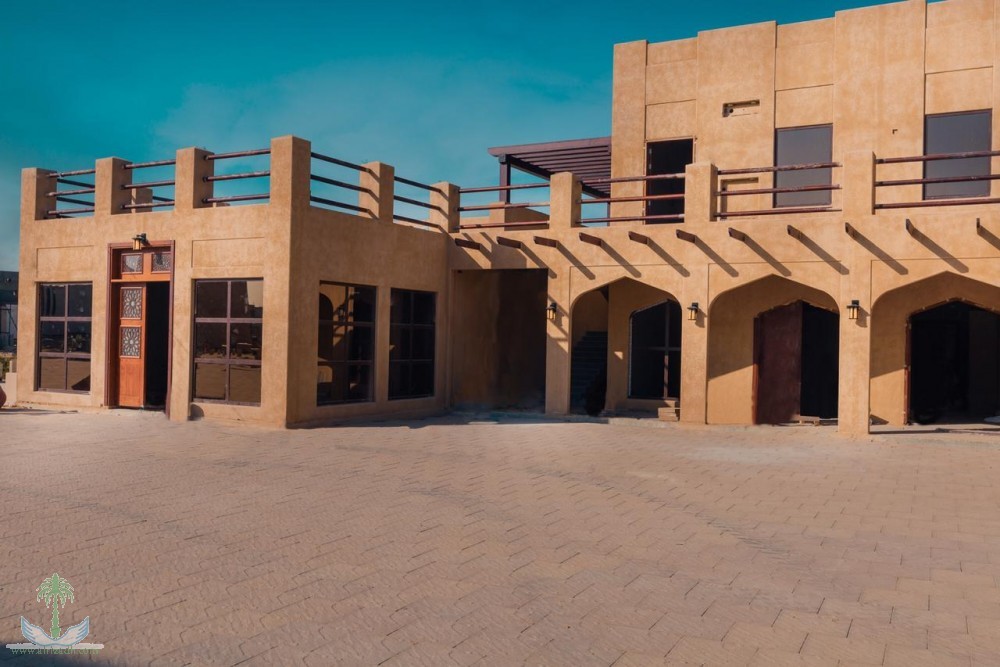
If humanization represents the soul, then "Salmani Architecture," which Prince Abdulaziz bin Ayyaf played a key role in crystallizing and framing conceptually, represents the identity and body of this soul- His Highness presented this concept not as a description of the architecture of a specific region or a confined architectural style, but as a "roadmap for urban management and development" and a "starting point for reviving the urban identity of Saudi cities."
- Connection to People, Land, and Identity: It is an architecture that "connects to people, land, history, identity, nationality, and all regions of Saudi Arabia." It is thus a comprehensive approach that respects the distinctive local urban fabric of each region in the Kingdom.
- Harmonizing Authenticity and Modernity: The Salmani approach is based on "merging authenticity with modernity," seeking to accommodate every new contemporary development provided it does not affect the spirit of the building and its belonging to its surroundings.
- Inspired by the Legacy of King Salman: This architecture emanated from the urban movement led by the Custodian of the Two Holy Mosques, King Salman bin Abdulaziz—may God protect him—during his long tenure as Governor of Riyadh, where his strategic vision shaped the city's urban fabric.
Prince Abdulaziz bin Ayyaf was keen to correct misconceptions about Salmani Architecture, emphasizing that it is not a "unification of the Najdi style," not "limited to projects built during King Salman's era," and not "reduced to architectural form only," but rather a broader planning framework encompassing environmental and human considerations- Embodiments of this approach appear in projects such as Al-Hukm Palace, the King Abdulaziz Historical Center, and the Diplomatic Quarter in Riyadh, with the King Salman District project (developed from the Al-Waha and Salah al-Din districts) being a model for applying humanization through the Salmani style.
Within this framework, the Prince Abdulaziz bin Ayyaf award for the Humanization of Cities comes as a strategic link- On one hand, it is a tribute to his visions and achievements; on the other, it is an effective tool to stimulate future generations to continue and enrich this path- The award aims to support academic researchers and undergraduate and graduate students in presenting research and projects that support the principle of urban humanization, contributing to creating research competitiveness to achieve social interaction and economic efficiency within the urban space- The award covers multiple areas including peer-reviewed scientific research, graduation projects, and practical initiatives such as the "Urban Design Studio for the Humanization of Residential Neighborhoods," which involved more than 200 male and female students.
The award is a cornerstone for raising awareness of the importance of humanization within the framework of Vision 2030, which has made cities balanced between modernity and heritage a strategic goal- It also highlights best practices for transforming cities into human-friendly environments- The most prominent outputs and importance of the award lie in:
1- Knowledge Generation: Encouraging the production of applied research and ideas that touch upon the cultural, procedural, and physical dimensions of humanization, from supporting visual identity and facilitating governmental procedures to increasing green spaces and enhancing pedestrian environments.
2- Capacity Building: Cultivating a new generation of planners, designers, and engineers who carry within their professional tools a high sensitivity to the human dimension and local identity, as evident in the widespread student participation.
3- Enhancing Community Partnership: Through accompanying initiatives like workshops for neighborhood humanization, the award revives the principle of community participation championed by Prince Abdulaziz bin Ayyaf, enabling residents to participate in decision-making.
4- Integration with the National Vision: This impact is clearly evident in the award's honoring of programs like the Quality of Life Program, one of the Vision 2030 programs, confirming its role as an incubator for ideas that serve major national goals.
The Prince Abdulaziz bin Ayyaf award for the Humanization of Cities represents more than just an academic competition; it is a declaration of intellectual and practical maturity- It is the culmination of a long journey that began with pioneering practical application in the streets and gardens of Riyadh, deepened with the crystallization of an original intellectual framework embodying "Salmani Architecture," and today, it moves towards the future by building a knowledge and human base capable of preserving the city's spirit and identity as it launches towards the horizons of modernity- With this integrated vision, the award and the legacy it represents lay solid foundations for Saudi cities that are, truly, a building block in the nation's edifice and a homeland for humanity.