Jazan Region’s Pastures Offer Rich Plant Diversity, Abundant Nectar for Honey Production
Recent rainfall in Jazan Region has created new opportunities for beekeepers by renewing vegetation and bringing flowers into bloom across plains, valleys, and mountain highlands, turning pastures into sources of nectar and pollen.
Throughout the nectar seasons, sidr, samar, salam, shawka, dhahyan, and qatad trees are sources of nectar for honey production in Jazan. The qatad season begins in January and continues through February and early March, while dhahyan and sidr honey are produced in October and November.
Several beekeepers in Jazan Region noted that monitoring plant growth after rainfall helps determine the best times to take advantage of pastures.
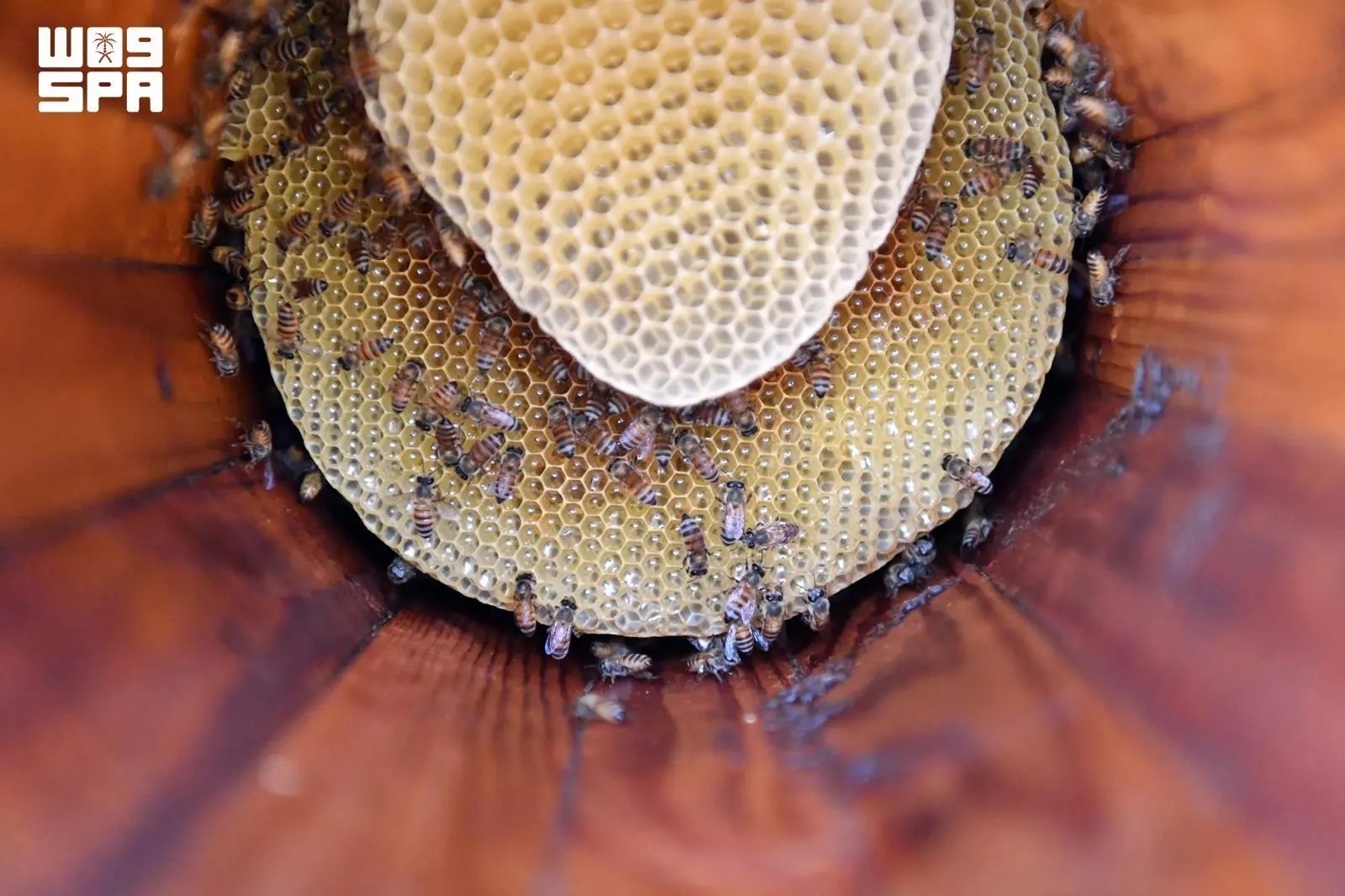
Vice President of the Jazan Beekeepers Association Suleiman Al-Ghazwani said the number of beekeepers in the region has exceeded 3,000, while traditional beehives have reached 160,915, in addition to 130,000 modern ones.
He said honey production varies among pastures depending on flower abundance and the length of the blooming period, noting that the region’s annual output reached 426,526 kilograms.
The importance of nectar-producing pastures extends beyond local activity. Al-Ghazwani noted that Jazan Region attracts more than 1,000 beekeepers annually from across Saudi Arabia.
Jazan Region’s pastures show how plant diversity and local expertise work together to boost output, creating broader opportunities to benefit from natural resources, promote sustainable agricultural practices, and strengthen its presence in Saudi Arabia’s honey production and marketing industry.