100 Gates: The Craftsmanship and Care Behind Prophet’s Mosque Entrances
At the Prophet's Mosque in Madinah, 100 gates stand as enduring symbols of the meticulous care devoted to the sacred site across the centuries.
Distinguished by precise design, intricate ornamentation, and superior craftsmanship, the gates reflect the sustained attention the mosque receives while embodying the Islamic values of welcome and openness.
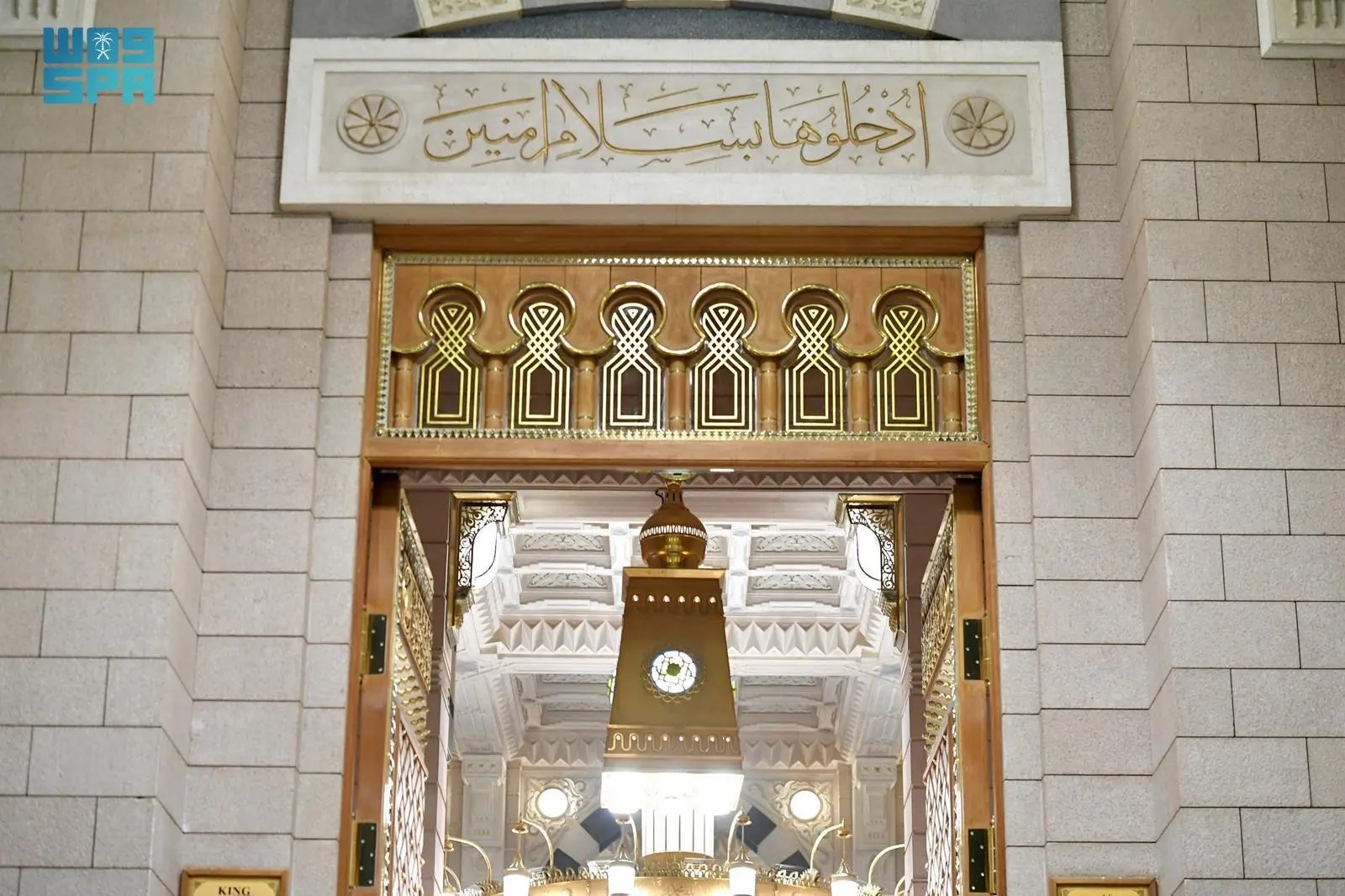
Among the most prominent are gates whose names are deeply tied to the Prophet’s Mosque history and stature, including Al-Salam Gate (of Peace), Al-Rahmah Gate (of Mercy), Bab Jibreel (Gate of Gabriel), Bab Al-Nisa (Gate of Women), Bab King Abdulaziz, and Bab Abdulmajid. Each represents a distinctive example of Islamic artistry, with finely executed engravings and harmonious decorative motifs that express the mosque’s architectural identity.
A major milestone came during the expansion, launched during the reign of King Fahd bin Abdulaziz, which introduced new main entrances built to the highest engineering standards. The expansion included seven principal entrances, three on the northern side and two each on the eastern and western sides. Each entrance branches into seven large gates, arranged with two set apart and five grouped at the center in a layout designed to ensure smooth crowd flow and easy access for worshippers.
Each gate measures 3 meters wide and 6 meters high, with a thickness exceeding 13 centimeters and a weight of about 1.25 tons. Despite their massive structure, the gates open and close smoothly thanks to specialized engineering that allows outstanding ease of use.
Crafted from premium teak wood, the gates required more than 1,600 cubic meters of timber. Every gate features over 1,500 gilded brass pieces engraved with a circular motif bearing the inscription “Muhammad is the Messenger of Allah.”
Their manufacture spanned several countries: the gilded brass was polished in France, the wood was selected and assembled in the United States, and the components were kiln-dried in Barcelona, Spain, for five months before being cut with advanced techniques, finished in gold, and joined using traditional interlocking methods without nails.
Today, the gates of the Prophet’s Mosque remain a striking testament to the harmony of artistic beauty and engineering precision and an enduring symbol of Saudi Arabia’s care for the mosque and its commitment to preserving the authenticity of Islamic architecture while embracing modern techniques.